
Transforming space
through reuse
A blueprint for urban circularity
The Lasnamäe Circularity Centre is a flagship project by the City of Tallinn, designed not only as a wastesorting station but as a multifunctional public space. The center integrates repair workshops, reuse rooms, educational programs, and a circular shop – this combination transforms the building into an environment where residents can learn, participate, and adopt more sustainable habits in their daily routines.
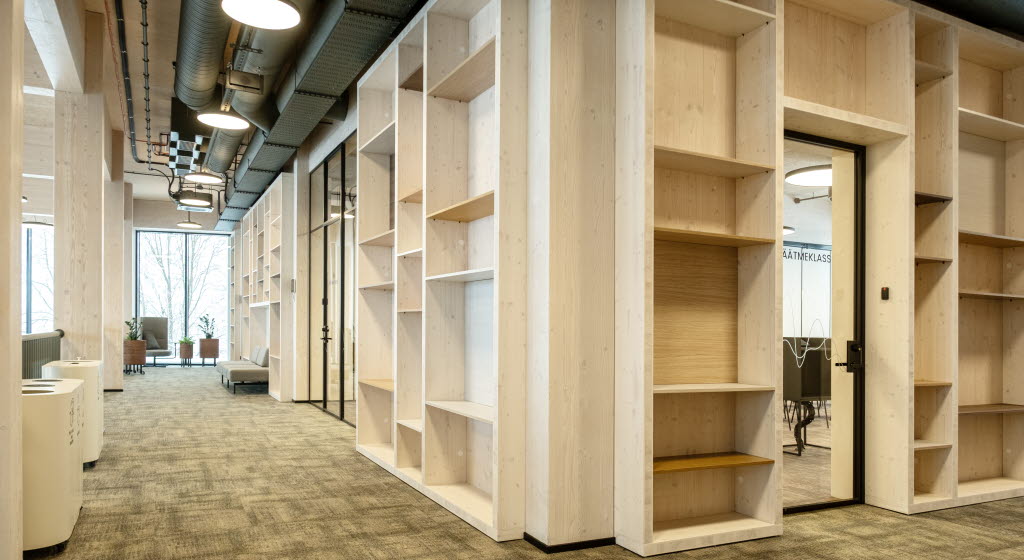
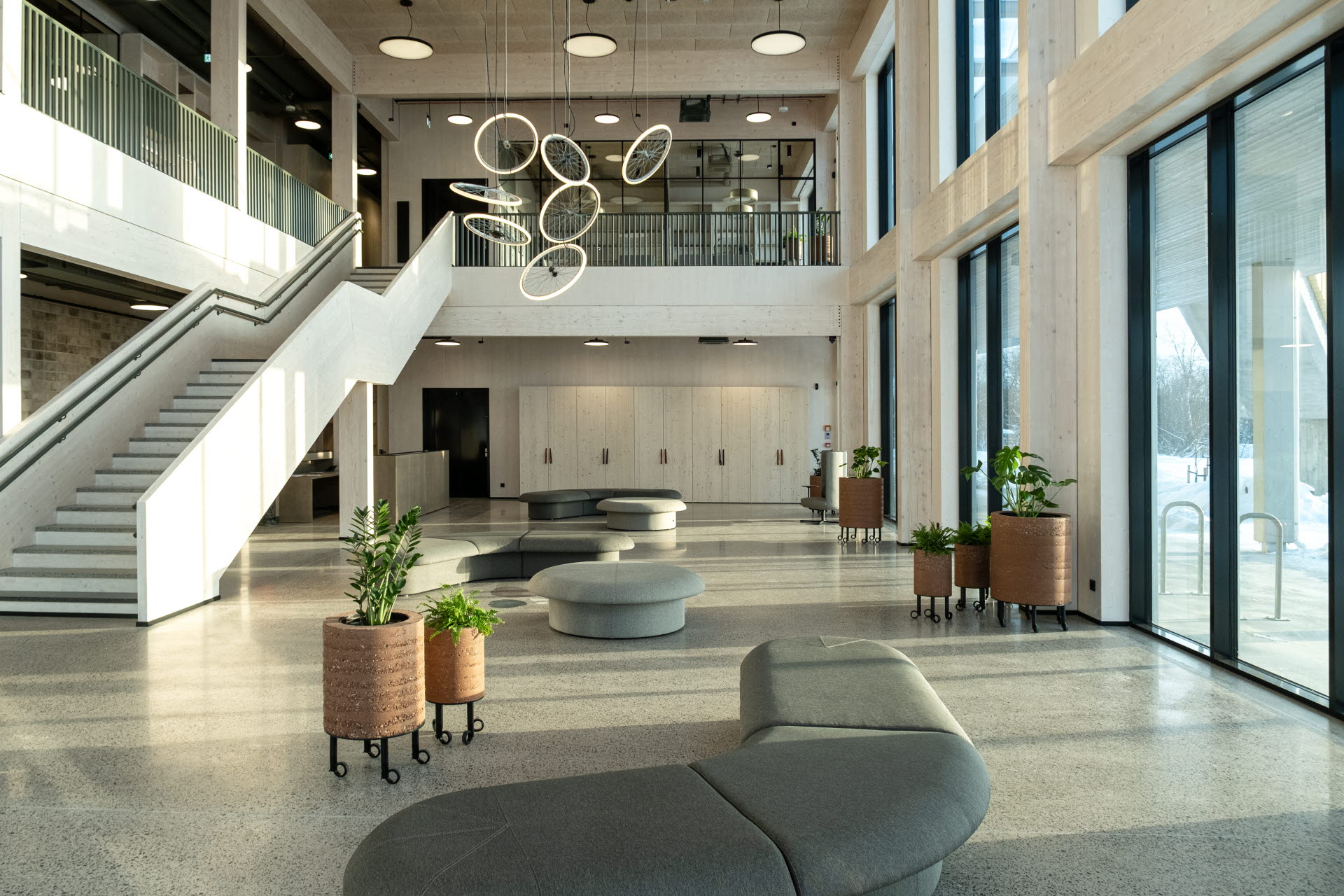
The architectural vision focuses on openness, accessibility, and a welcoming atmosphere. The building is designed to feel practical yet inviting, ensuring that people from all backgrounds feel encouraged to engage with circular services. ITAB’s contribution was central to turning the architectural concept into a fully functional, sustainable interior.
A major focus of the scope was implementing reuse as a design principle, ensuring that existing client-owned furniture and materials were carefully restored and reintegrated into the new environment. Where new furniture was required, ITAB designed and produced custom pieces tailored to the center’s functional needs, with sustainable value and a warm, tactile material quality.
Beyond furniture, ITAB’s scope included complete project coordination, engineering, production, delivery, and installation – ensuring a seamless process from design to opening day. Attention to detail was crucial, especially in integrating new materials with restored elements to form a coherent and unified interior.
Additionally, ITAB collaborated closely with local Estonian artists to incorporate art elements that reflect the identity and creativity of the surrounding community.
Today, the Lasnamäe Circularity Centre stands as a compelling example of how sustainable design, material reuse, and community-driven planning can merge in a public building. Through ITAB’s delivery, the center not only meets functional requirements but also elevates the user experience, showcasing how thoughtful interior solutions can support a broader city-level sustainability strategy.
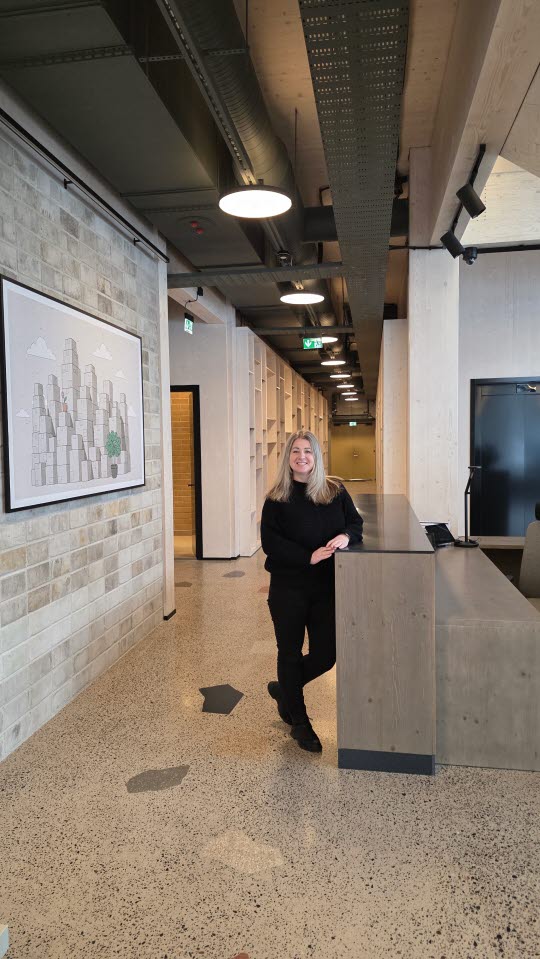
“My role was to ensure that the architect’s vision was translated into a fully functional and deliverable solution. A key focus was integrating reused and new elements into a coherent interior, ensuring alignment between sustainability, functionality, and quality throughout the project.”
Anna Alasoo
Project Manager