
Three Shoptalk Europe 2026 conversations, one message
Different sectors. Different business models. Different growth challenges.
However, the same conclusion on every stage: the future of retail won’t be won on technology, store design, brand, operations or experience alone. It will be won on how well a retailer connects them into a single, coherent customer journey.
That’s the whole point of our work. We don’t deliver individual retail solutions in isolation; we help retailers build environments that are more relevant, more efficient and better matched to the way people shop today.
1. Arc’teryx: Growth without losing what makes the brand matter
The session cited Arc’teryx’s growth from $500 million in 2020 to $2.7 billion, but the story was not framed as growth for its own sake. It was framed around discipline: knowing what the brand stands for, putting the mountain athlete at the centre, and making deliberate choices about product, distribution and experience.
One of the strongest takeaways was the importance of controlling the customer relationship. Arc’teryx discussed its shift from a heavily wholesale-led model towards a stronger direct-to-consumer approach, giving the brand more control over how it shows up in the market and how customers experience it.
One of the strongest takeaways was the importance of controlling the customer relationship. Arc’teryx discussed its shift from a heavily wholesale-led model towards a stronger direct-to-consumer approach, giving the brand more control over how it shows up in the market and how customers experience it.
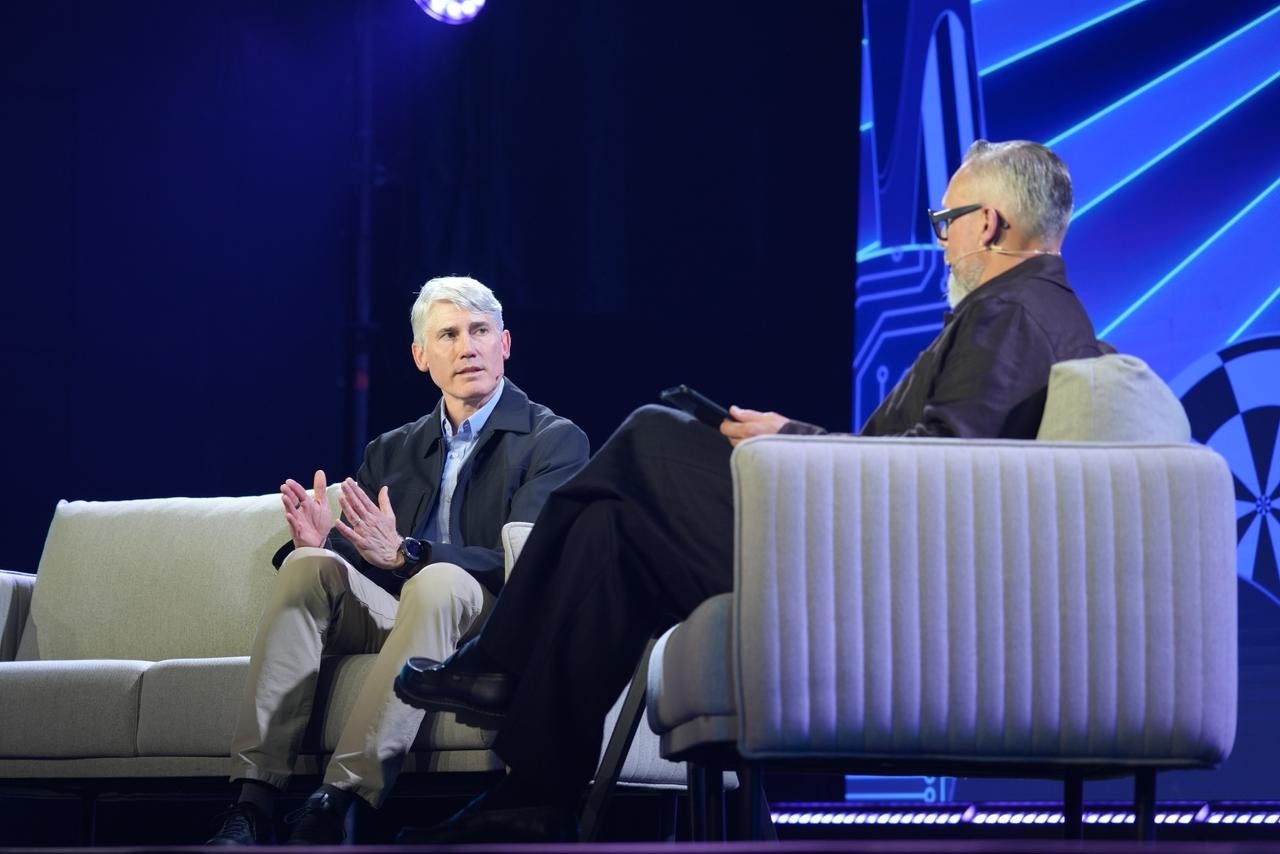
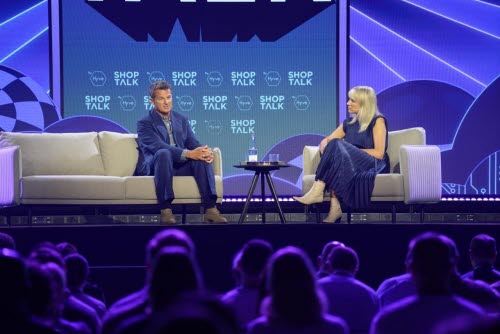
Stuart Haselden, CEO of Arc’teryx
This is where design, layout, service and experience become strategic. A physical retail environment needs to express what the brand believes, support the community it serves and create a level of experience that cannot be replicated through transaction alone.
The discussion also showed how repair, care and circularity can become part of the customer experience, not simply a sustainability statement. Which raises the question that our customers should ask of every store: can it be designed not just to sell, but to deepen loyalty, extend product life and support the kind of service that turns a buyer into a long-term relationship?
2. John Lewis: Trust, discovery and the changing role of the store
The session with Peter Ruis, Managing Director of John Lewis, explored a very different but equally important challenge: how an established retailer remains relevant when customer discovery is changing at speed.
The conversation highlighted how competition has moved beyond traditional department stores. John Lewis is now competing with specialists, global technology businesses, social platforms and the best customer experiences shoppers encounter anywhere.
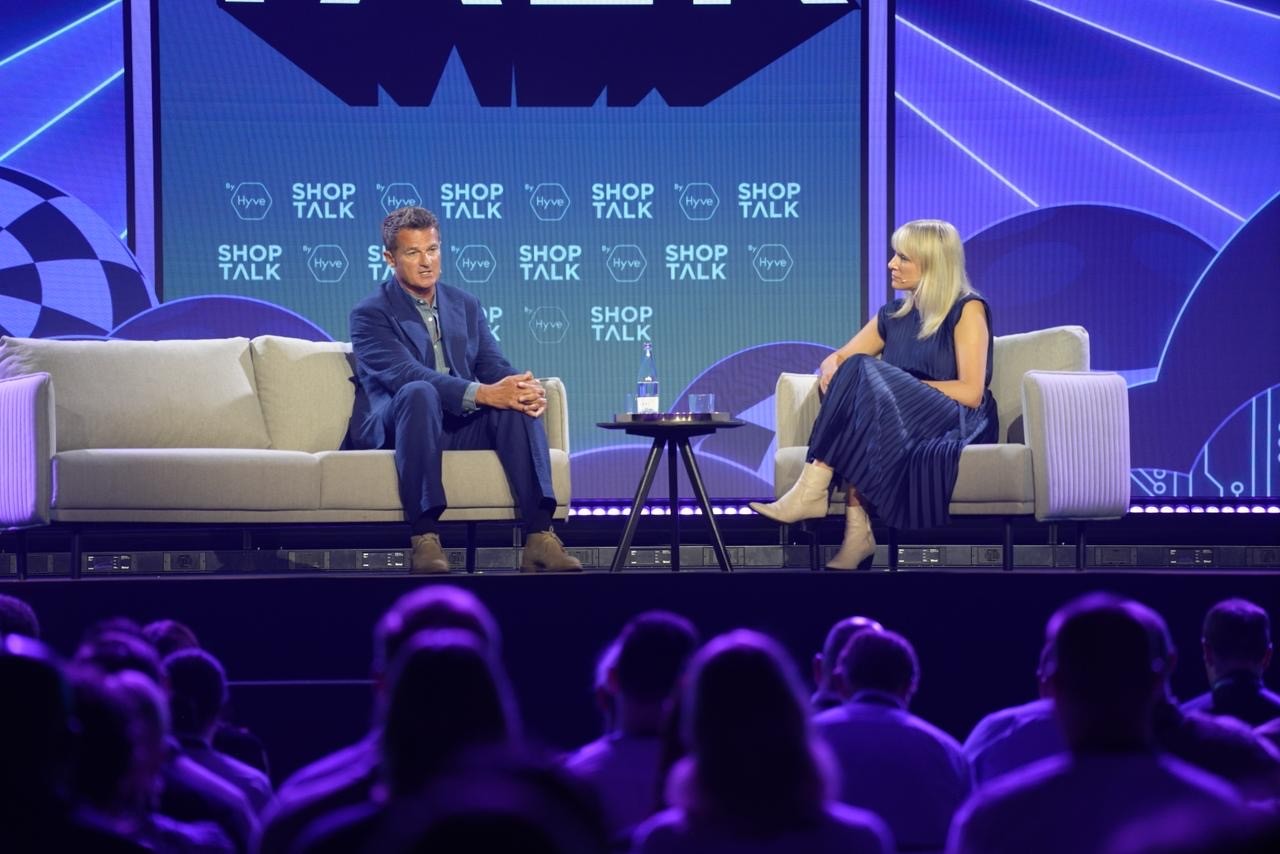
Peter Ruis, Managing Director of John Lewis
That creates a new challenge for retail. Customers no longer follow a linear path from awareness to purchase. Discovery is fragmented across social commerce, AI search, delivery platforms and physical stores.
But the session also reinforced something important: technology does not remove the need for human trust.
John Lewis continues to see value in advice, service, curation and physical experience. Whether customers are looking for baby advice, home products, technology, fragrance, fashion or resale, the store remains a place where customers can validate decisions, experience products and access expertise.
The implication runs straight through the store itself. Retailers now need environments that hold both sides at once, digital discovery and human reassurance, connecting inspiration, advice, service, product interaction and fulfilment in a way that feels natural to the customer and works operationally for the retailer.
3. Alcampo and Ocado: Operational excellence as customer experience
The conversation with Carlos Pedreira Freire, CEO of Alcampo, and Gregor Ulitzka, President, Europe at Ocado Group, brought the discussion back to one of retail’s most important realities: customer experience depends on operational execution.
Alcampo described a Spanish consumer under pressure: more price-conscious, shopping smaller baskets, visiting more frequently and looking for formats that better fit changing household needs. At the same time, ecommerce is becoming a major part of the transformation, with Ocado highlighting the need for retailers to manage complexity across fulfilment, last mile and customer promise.
The discussion made one point especially clear: in grocery, the customer proposition only works if the operation works.
Range, price and convenience matter. But if orders arrive late, items are missing or freshness is compromised, trust is quickly lost. Ocado’s perspective was that online grocery requires excellence across every part of the operating model, from supply chain and waste reduction to last-mile optimisation and automation.
The session reported strong results from Madrid, including 60% more daily orders, a 71% increase in customer perception/NPS, fewer than 2% of orders arriving late, and more than 98% order accuracy.
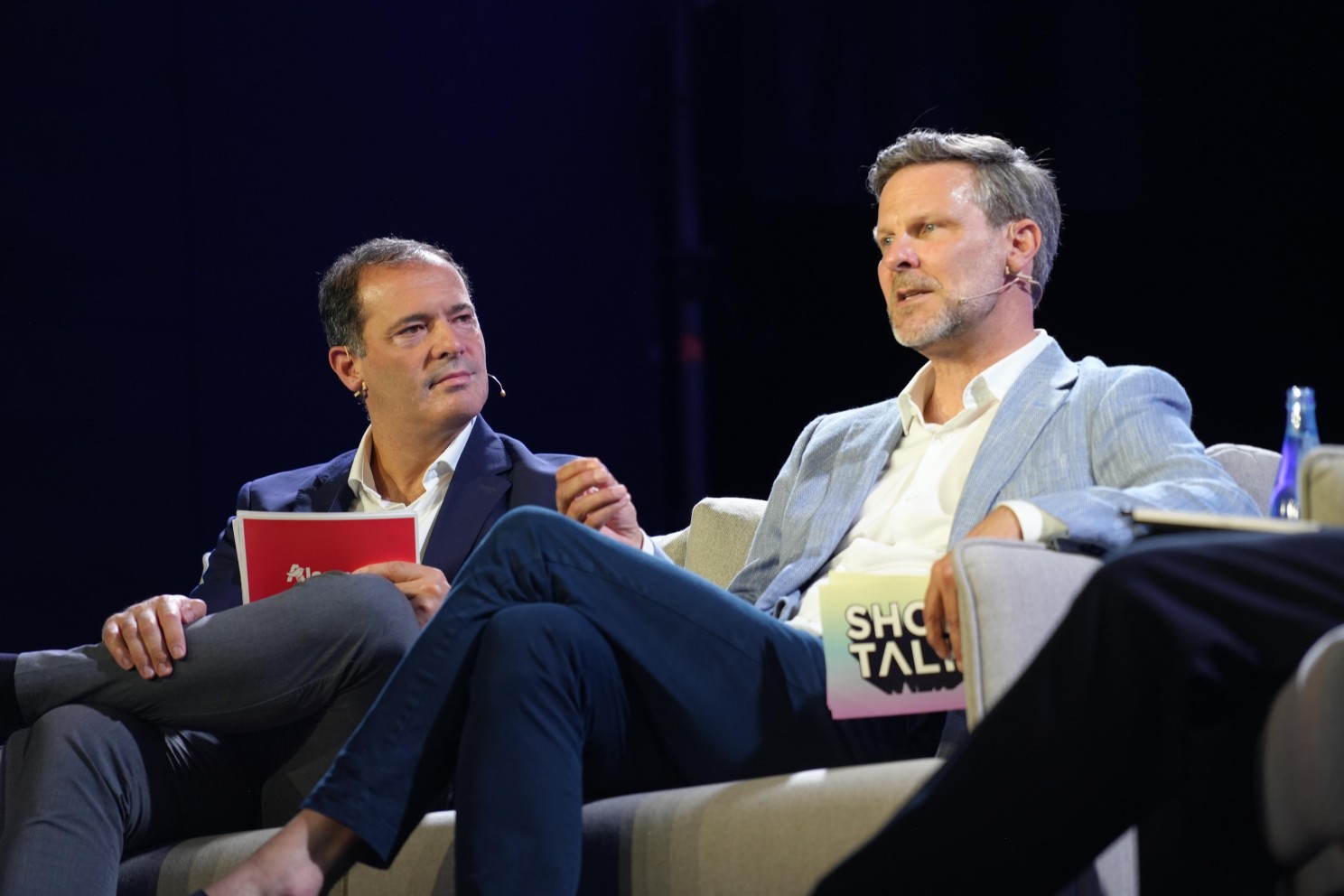
Carlos Pedreira Freire, CEO of Alcampo and Gregor Ulitzka, President, Europe at Ocado Group
The lesson reaches well beyond e-commerce. Retail performance lives or dies on the gap between the promise and the operation behind it. Layout, checkout, customer flow, service areas, back-of-house and technology either close that gap or widen it, the moment a physical environment stops being décor and becomes business infrastructure.
What this means for our customers
Across all three conversations, the direction is the same. Growth now takes more than expansion; it takes sharper execution. Customers want more relevance, convenience, trust and consistency. Teams want environments that are easier to run. Brands want spaces that say who they are. Leaders want formats that flex as behaviour shifts.
That convergence is where our work matters most. We bring together design, interiors, technology, lighting, checkout, customer flow and operational thinking so the whole environment performs, for customers, for colleagues and for the business.The best retail spaces aren’t defined by a single standout feature; they’re defined by how well every element works as one.
That was the strongest signal from Shoptalk Europe 2026. Retail isn’t becoming less physical. It’s becoming more connected, more intentional and more demanding, which is exactly why the store still matters.